

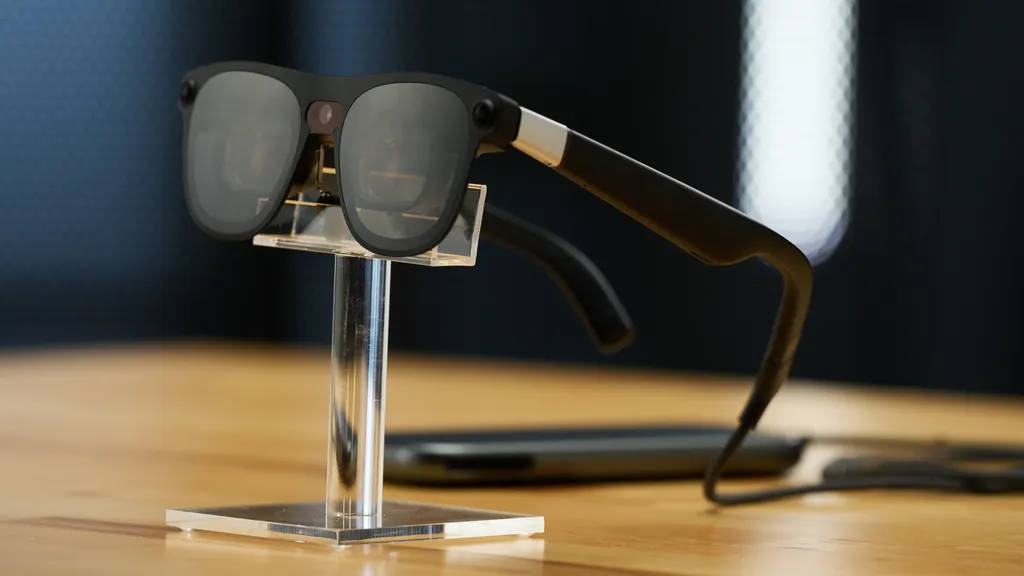
It was always going to happen — the next wave of computing didn’t arrive on a desk, a smartphone, or even a smartwatch. Instead, it perched lightly on your nose. Enter Project Aura.
At the crossroads of ambition and possibility, Google and Xreal have unveiled their vision for what smart glasses should look — and feel — like in 2026. Toss aside the bulky headsets, the heavy VR helmets, the awkward “goggles.” Aura seeks subtlety, practicality, and power — wrapped in something closer to sunglasses than sci-fi gear.
The Birth of a New XR Era
Project Aura was first announced at Google I/O 2025, marking a turning point for the budding XR landscape. Partnering with Xreal — a company already familiar with lightweight AR hardware — Google decided to push not just hardware, but the entire ecosystem: a new operating platform called Android XR that runs beneath.
Where past gestures at “smart glasses” often ended in experimental gimmicks, Aura represents a mature return — one rooted in real functionality: real apps, reliable performance, and a serious ambition to make spatial computing part of daily life.
Xreal contributes its optical know-how: transparent “optical see-through” lenses that let you see the real world, while digital content quietly coexists — no heavy VR blackout, no insulating bubble.
Under the hood, the glasses lean on Qualcomm’s XR-ready silicon — a Snapdragon XR chip (alongside Xreal’s custom XR-optimized X1S chip) — enabling substantial processing without sacrificing the light, eyewear-like form.
What Aura Looks Like — And What It Does
Imagine a chunky-ish pair of sunglasses: thick frames, clear/translucent lenses, subtle cameras maybe near the bridge or hinges, a cable trailing down to a small “puck” device (power + compute + connectivity), clipped to your pocket or belt. That’s Aura in its current prototype form.
Once you power up, the magic begins: Aura offers a field of view up to 70 degrees — a truly large “screen” in your vision, enough to host floating windows of Android apps: a virtual desktop, a video window, an interactive map, photos, maybe even a light 3D game or creative tool.
In demos: maybe you open a photo-editing app (like Lightroom) on one “screen,” glance at a YouTube video on another, and still see the real world around you. Or you look at a painting — and the glasses (via AI) recognize it; you call up directions, launch music controls, or even ask for live translation while walking through a foreign city.
Why This Time Might Be Different
The tale of “smart glasses” is not new. Years ago, Google tried with one path, and the world wasn’t ready. The hardware was bulky, the software limited, the use-cases narrow. But now, with Aura, things have shifted.
Android XR: By building on a full-fledged XR-capable OS instead of bolting AR onto a smartphone, Google gives developers a real platform — meaning “real apps” instead of stripped-down demos.
Real apps from Day One: Because Aura runs Android XR, apps don’t need special rewrites. The glasses can run things originally designed for XR headsets (like Galaxy XR) — a big win over ecosystems that begin with “empty promise.”
Collaboration over isolation: Instead of building everything in a Google bubble, the company partners with hardware specialists (Xreal), chipmakers (Qualcomm), and pushes an open-ish path for developers — a more sustainable path than the “one-device wonder” approach.
Everyday wearability: The glasses format — light, unobtrusive, transparent — means Aura could double as regular eyewear or mild sunglasses. No VR-style helmet drama. That subtlety makes XR feel like something people could actually wear outside the lab.

What’s Still Unclear — And What We Should Watch
Because Aura’s still in prototype/dev-kit stage, many questions hang in the air:
Battery life & real-world comfort: The “puck + tethered glasses” solution keeps frame weight down, but how long will the puck last? How convenient will the glasses be during a full day of use? Google/Xreal haven’t shared details yet.
Final form factor & styling: Will the cameras, wires, and sensors stay visible? Will the glasses remain subtle enough for everyday use, or end up looking like a tech demo? Until a consumer-ready build surfaces, the answers are murky.
App ecosystem & real adoption: Sure — Android apps can run, but will developers embrace XR? Will UI paradigms adapt well? The “floating window” model is impressive, but only if people adopt it widely.
Price point & market positioning: Google has not revealed what Aura will cost, nor which markets will get it first — and that could shape everything. Affordable but functional vs premium niche will decide its fate.
Privacy & social acceptance: Smart glasses carry baggage (past failures, public skepticism). That “optical see-through + cameras + AI” combo might invite scrutiny. Google hints at “visible recording indicators” and robust sensor-access controls — a good start, but public comfort remains to be earned.
Why Project Aura Matters
Because if Aura gets this right, it's not just a gadget — it may be the beginning of a shift.
A shift from screens to vision. From separate devices (phone, laptop, VR headset) to a unified wearable canvas. From apps tied to hardware, to spatial apps that float around you — sheathed in sunlight or office fluorescence, existing alongside reality.
If Aura delivers — if Android XR communities grow, if developers build for it, if comfort, functionality and price align — then we may look back at 2026 not as “just another eyewear launch,” but as the moment computing leapt from our desks and pockets onto our faces.
In a world that’s already glued to screens, Project Aura might invite us to look up.
Note: Content and images are for informational use only. For any concerns, contact us at info@rajasthaninews.com.

Previous Post
Next Post
TSMC Optimistic Amid...
Related Post

_1787656777.jpg)
_1787582561.jpg)
_1788282058.png)
_1788281507.png)
_1788280999.png)

_1788280346.png)