

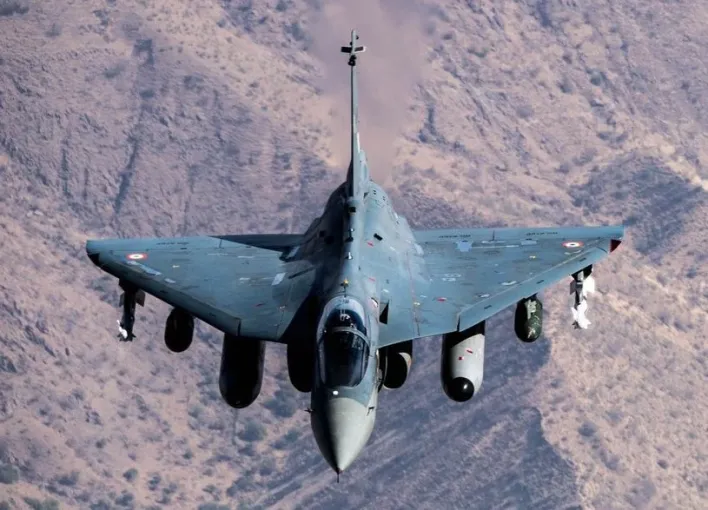
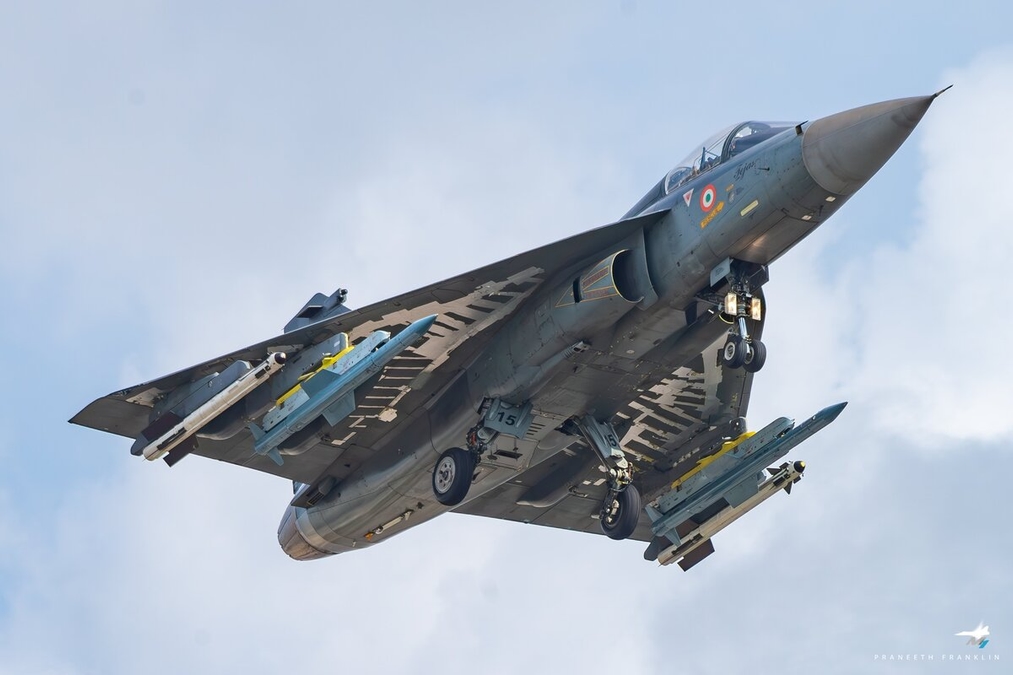
In a major boost to India’s indigenous defense capabilities, the Indian Air Force has successfully integrated and tested long-range air-to-air missiles on the domestically developed HAL Tejas Mk1A fighter aircraft.
The achievement is being viewed as a crucial milestone in strengthening India’s aerial warfare readiness and advancing the country’s self-reliance goals in defense technology. Defense experts say the successful integration significantly enhances the combat potential of the Tejas platform by enabling beyond-visual-range engagement capability against enemy aircraft.
The HAL Tejas Mk1A is one of India’s most important indigenous military aviation projects, developed as part of the country’s long-term effort to reduce dependence on foreign fighter aircraft and defense imports. The upgraded Mk1A variant includes improved avionics, radar systems, electronic warfare capabilities, and advanced weapons integration.
According to defense reports, the successful missile trials demonstrated the aircraft’s ability to accurately deploy long-range air-to-air weapons under operational conditions. Such missile systems are designed to strike hostile aerial targets from significant distances, giving pilots a strategic advantage during combat situations.
The development is particularly important in the context of evolving regional security dynamics and modern aerial warfare requirements. Analysts note that modern fighter aircraft are increasingly evaluated not just on maneuverability, but also on sensor fusion, weapons range, electronic warfare systems, and network-centric combat capabilities.
The successful testing further reinforces the role of Hindustan Aeronautics Limited in India’s growing defense manufacturing ecosystem. The company has been at the center of multiple indigenous aviation projects aimed at modernizing the country’s air combat fleet.
Defense experts believe the missile integration will improve the operational flexibility of the Indian Air Force and provide greater tactical capability in high-threat environments. Beyond-visual-range missile systems allow fighter jets to detect and engage adversaries before entering close-range combat.
The achievement also aligns with India’s broader “Atmanirbhar Bharat” initiative focused on domestic manufacturing and technological independence in critical sectors, including defense and aerospace.
Military analysts have praised the progress made by the Tejas program over the years, noting that the aircraft has evolved into a far more capable multirole fighter platform than many initially expected. The Mk1A variant is expected to play an increasingly important role in the future composition of India’s combat fleet.
Social media platforms and defense communities reacted positively to the announcement, with many users calling it a proud moment for Indian aerospace engineering and military modernization.
In conclusion, the successful integration and testing of long-range air-to-air missiles on the HAL Tejas Mk1A marks a major step forward for India’s defense capabilities. The milestone highlights the growing maturity of indigenous military technology and reinforces India’s ambitions to become a leading defense manufacturing power.
Note: Content and images are for informational use only. For any concerns, contact us at info@rajasthaninews.com.

Previous Post

Next Post
TSMC Optimistic Amid...
Related Post

_1787656777.jpg)
_1787582561.jpg)
_1788282058.png)
_1788281507.png)
_1788280999.png)

_1788280346.png)