
Education
Bag-less Policy 2026-27: Textbooks to Be Distributed in Two Phases Under NEP, Reducing Student Bag Weight by 50%
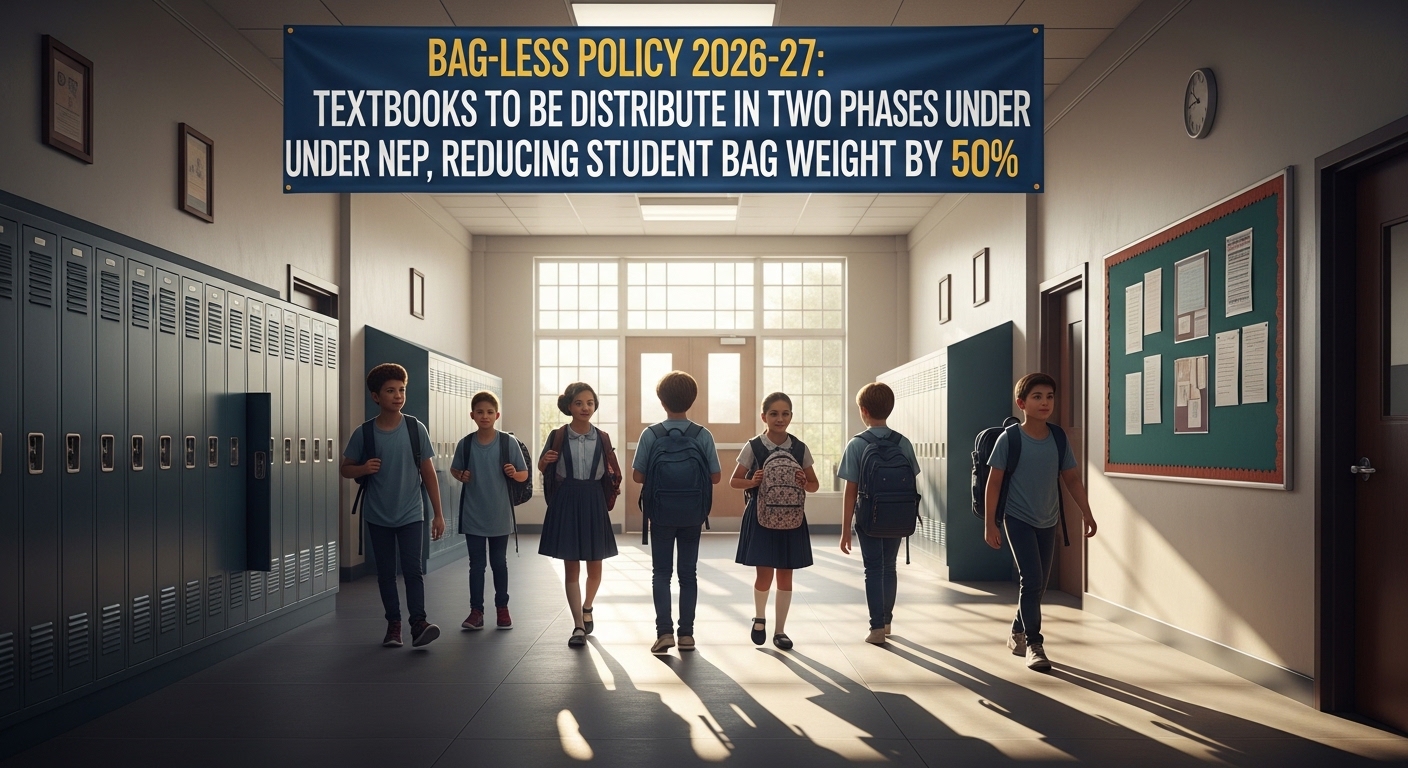
In a major step toward improving student well-being and aligning with the objectives of the New Education Policy (NEP), the education department has announced that textbooks for the 2026-27 academic session will be distributed in two phases. The primary goal of this initiative is to reduce the weight of school bags by nearly 50 percent, addressing long-standing concerns about the physical strain faced by students.
For years, parents, educators, and health experts have raised concerns over the excessive weight of school bags carried by children, especially in primary and middle school. Carrying multiple textbooks and notebooks daily often results in back pain, shoulder strain, and posture-related problems. Medical professionals have warned that prolonged exposure to heavy school bags can negatively affect a child’s spinal development and overall physical health.
To tackle this issue, the department has introduced a structured, two-phase textbook distribution system. Instead of providing the entire set of textbooks at the beginning of the academic year, books will now be issued according to the academic schedule. In the first phase, students will receive textbooks required for the initial months of the session. The remaining books will be distributed in the second phase when those subjects are scheduled to be taught.
This approach ensures that students only carry the books necessary for their current coursework, significantly reducing daily load. Schools will also be encouraged to design timetables thoughtfully so that students are not required to bring too many subjects’ materials on a single day.
The Bag-less Policy 2026-27 reflects the broader vision of the NEP, which emphasizes holistic development, experiential learning, and student-centric reforms. By reducing physical burden, the policy aims to create a more comfortable and stress-free learning environment. A lighter school bag can help students focus better in class and participate more actively in co-curricular and physical activities.
Additionally, the initiative may encourage the integration of digital learning resources. Schools could increasingly adopt e-content, shared classroom materials, and activity-based modules to further reduce dependence on printed textbooks. This shift aligns with modern educational trends and promotes smarter resource management.
Parents and educators have largely welcomed the move, seeing it as a practical solution to a persistent problem. If implemented effectively, the two-phase textbook distribution system could serve as a model for education reforms in other regions as well.
Overall, the Bag-less Policy 2026-27 marks a significant milestone in India’s education reform journey. By prioritizing student health and comfort, the initiative demonstrates a balanced approach that combines academic excellence with physical well-being, ensuring a healthier and more productive learning experience for students.

Note: Content and images are for informational use only. For any concerns, contact us at info@rajasthaninews.com.
Previous Post
Next Post
"हाईकोर्ट ने प्राइव...
Related Post
_1787583414.jpg)
_1788366719.png)
_1788365907.png)
_1788365336.png)