

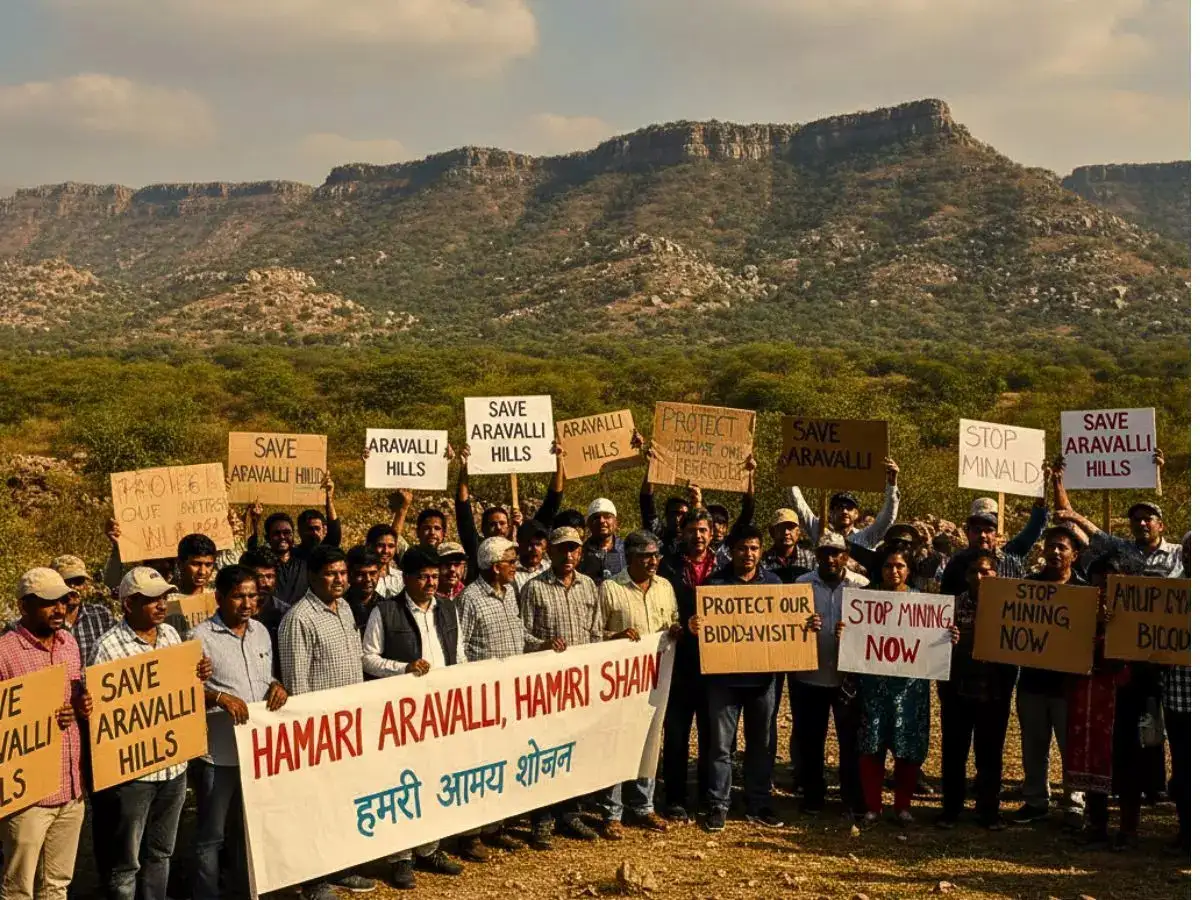
Across different parts of the world, local conservation battles are gaining urgency as communities, environmentalists, and authorities struggle to protect fragile ecosystems from growing human pressure. From the ancient Aravalli hills in India to seal habitats along the UK coastline and vast forest regions across India, these conflicts highlight the challenges of balancing development with environmental preservation.
The Aravalli hills, one of the oldest mountain ranges in the world, play a crucial role in maintaining ecological balance in northern India. Stretching across several states, the range acts as a natural barrier against desertification and supports groundwater recharge. However, mining, real estate expansion, and infrastructure projects have increasingly threatened the region. Conservationists have repeatedly warned that unchecked degradation of the Aravallis could worsen air pollution, water scarcity, and heatwaves in nearby urban centres such as Delhi and Gurugram. Local activists and courts have stepped in to curb illegal mining, but enforcement remains inconsistent.
In the United Kingdom, conservation efforts have focused on protecting seal populations, particularly grey and harbour seals that depend on undisturbed coastal habitats for breeding and resting. Human activities such as tourism, coastal development, and boating have disrupted these sensitive environments. Wildlife groups have raised concerns about seals being disturbed during critical breeding seasons, which can lead to pup abandonment and long-term population decline. In response, conservation organisations and local councils have introduced awareness campaigns, restricted access zones, and monitoring programmes to reduce human interference and ensure the survival of these marine mammals.
Meanwhile, Indian forests continue to face mounting pressure from deforestation, land diversion, and climate change. Forested regions are often cleared for agriculture, mining, and infrastructure projects, threatening biodiversity and the livelihoods of indigenous communities. These forests are home to countless species and play a vital role in carbon sequestration and climate regulation. Conservation battles in these areas frequently involve local communities asserting their rights to protect ancestral lands while advocating for sustainable development models.
What unites these conservation struggles is the growing recognition that local ecosystems have global significance. Damage to the Aravalli hills affects air quality and climate resilience far beyond their immediate surroundings. The loss of seal populations disrupts marine ecosystems, while deforestation in India contributes to global climate change. Environmentalists argue that protecting these habitats is not merely a local issue but a global responsibility.
Governments and policymakers are increasingly under pressure to adopt stronger environmental safeguards and ensure stricter enforcement of conservation laws. Community participation, scientific research, and public awareness are emerging as key tools in these battles. While progress has been made in some regions, experts caution that sustained efforts are essential to prevent irreversible damage.
As conservation battles intensify across the Aravalli hills, UK coastlines, and Indian forests, they serve as a reminder that environmental protection requires long-term commitment. The outcomes of these local struggles will shape not only regional ecosystems but also the broader fight against biodiversity loss and climate change.

Note: Content and images are for informational use only. For any concerns, contact us at info@rajasthaninews.com.

Previous Post

Next Post
"इको-फ्रेंडली इनोवेश...
Related Post
_1787743895.jpg)

_1788282058.png)
_1788281507.png)
_1788280999.png)

_1788280346.png)