

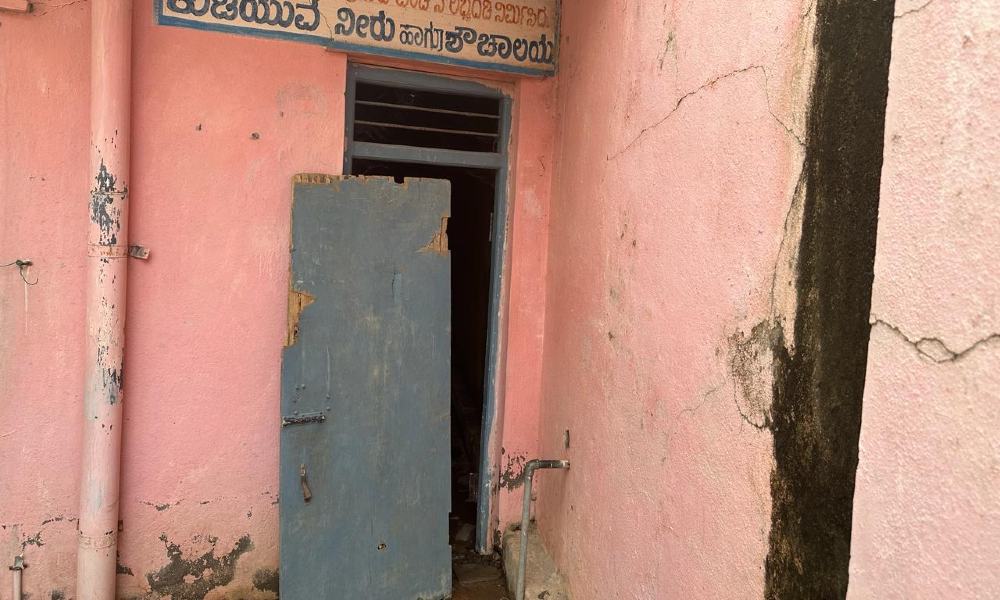
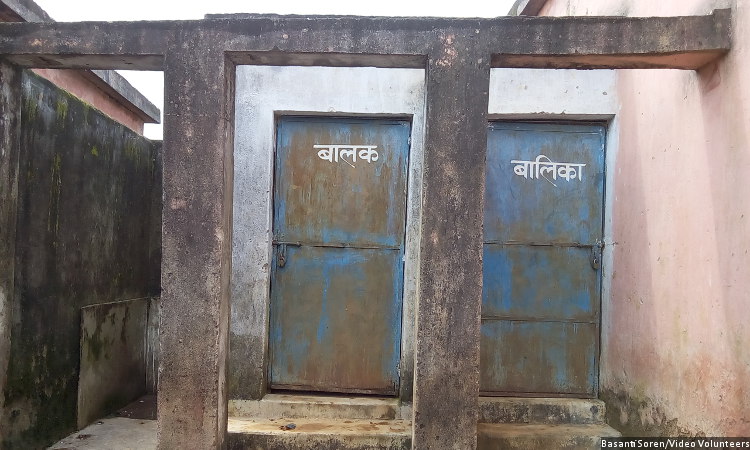
The Union government has informed Parliament that the vast majority of schools across India are equipped with functional girls’ toilets, projecting the claim as a key achievement under national sanitation and education initiatives. However, ground realities suggest a troubling gap between infrastructure on paper and actual usability, with poor maintenance, lack of cleaning staff, and inadequate funding undermining sanitation standards in many schools.
According to official data presented in Parliament, the construction of girls’ toilets has seen significant progress over the past decade, driven by programmes aimed at improving enrolment, attendance, and retention of girl students. Access to toilets is widely recognised as a critical factor in ensuring dignity, safety, and continuity of education, particularly for adolescent girls. Yet, educators and civil society groups argue that having a toilet building does not automatically translate into safe or hygienic access.
In many government schools, especially in rural and semi-urban areas, toilets exist but remain unusable due to clogged drains, broken doors, lack of running water, or foul conditions. A key reason for this decline is the absence of dedicated sanitation workers. School staff often report that cleaning responsibilities are either informally assigned to teachers, non-teaching staff, or, in some cases, neglected altogether due to manpower shortages.
Funding constraints further compound the problem. While capital expenditure for toilet construction is usually covered under central or state schemes, recurring costs for maintenance, cleaning supplies, and salaries of sanitation workers are rarely guaranteed. School management committees are often left to manage sanitation within limited operational budgets, forcing difficult trade-offs between cleanliness and other essential needs such as teaching materials or repairs.
The issue takes on added urgency during menstruation, when unhygienic toilets discourage girls from attending school altogether. Studies and field reports have consistently linked inadequate sanitation to higher absenteeism and dropout rates among adolescent girls, undermining broader goals of gender equity in education. Without proper cleaning, water supply, and waste disposal systems, toilets fail to serve their intended purpose.
Officials maintain that responsibility for upkeep lies with states and local bodies, while education activists argue that sanitation should be treated as a non-negotiable service, not an optional add-on. Experts stress that sustainable solutions require not just infrastructure but institutional accountability, earmarked funding, and regular audits to assess usability rather than mere availability.
The disconnect between parliamentary assurances and on-ground realities highlights a systemic issue in public service delivery — where success is measured by construction targets rather than lived experience. While the government’s data may show near-universal toilet coverage, the lack of a clear plan for maintenance raises fundamental questions about policy design and implementation.
As India seeks to strengthen its education system and improve outcomes for girls, the debate over school sanitation underscores a critical lesson: toilets are not just structures, but services that require people, money, and sustained attention. Without addressing these gaps, the promise of dignity and safety for girl students risks remaining unfulfilled despite impressive statistics.
Note: Content and images are for informational use only. For any concerns, contact us at info@rajasthaninews.com.

Previous Post

Next Post
"हाईकोर्ट ने प्राइव...
Related Post


_1787583414.jpg)
_1788282058.png)
_1788281507.png)
_1788280999.png)

_1788280346.png)